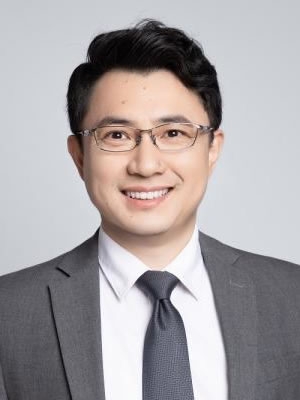
Prof. Kun Yang
Nanjing University, China
Kun Yang received his PhD from the Department of Electronic & Electrical Engineering of University College London (UCL), UK. He is currently a Chair Professor in Nanjing University (Suzhou Campus) and also affiliated with University of Essex. His main research interests include wireless networks and communications, edge computing and AI for wireless. He has published 500+ papers and filed 50 patents. He serves on the editorial boards of a number of IEEE journals (e.g., IEEE WCM, TNSE, TVT, TNB). He is a Deputy Editor-in-Chief of IET Smart Cities Journal. He has been a Judge of GSMA GLOMO Award at World Mobile Congress – Barcelona since 2019. He was a recipient of the 2024 IET Achievement Medal and the 2024 IEEE CommSoft TC Achievement Award. He is a Member of Academia Europaea (MAE), a Fellow of IEEE, and a Fellow of IET.
Speech Title: AI-enabled Self-driving Communication Networks
Abstract: Modern Artificial Intelligence (AI) has proven to be a powerful enabler that has gained success in many vertical fields. There is a clear evidence of determined effort in the communication and network community to explore the AI power to deliver 6G mobile network’s promises of being faster, greener and smarter. This talk starts with a brief introduction of 6G mobile communication systems, and then looks into how new AI technologies come into play in 6G from different perspectives. It covers new trends in 6G communication research such as data-driven end-to-end communication system design, semantic communications, digital twin networks (DTN). One major objective of these researches is to achieve self-driving communication networks where lengthy standardization of such as communication waveforms or protocol design can be somehow reduced or even eliminated, thus enabling 6G to self-drive to versatile requirements from vertical industries.

Prof. Liang Xiao
Xiamen University, China
Liang Xiao is IEEE Fellow and a Professor in the Department of Informatics and Communication Engineering, Xiamen University. She has served in several editorial roles, including an associate editor of IEEE Transactions on Information Forensics & Security, IEEE Transactions on Communication, IEEE Transactions on Wireless Communication and IEEE Transactions on Dependable and Secure Computing, and Guest Editor of IEEE Journal on Selected Topics in Signal Processing. Her research interests include wireless security, privacy protection, and wireless communications. She won 2024 IEEE ComSoc Asia-Pacific Outstanding Paper Award, as well as the best paper award for 2017 IEEE ICC, 2018 IEEE ICCS and 2016 IEEE INFOCOM Bigsecurity WS. She was 2022-2023 IEEE ComSoc Distinguished Lecturer.
Speech Title: Large Language Model-Aided Intelligent Anti-Jamming Maritime Communications
Abstract: Harsh marine environment and jamming attacks significantly degrade the transmission reliability of multi-modal data such as text, images, and videos. In this report, we propose large language model-aided intelligent anti-jamming maritime communication scheme that optimizes transmit channel and power based on jamming features and extracted environmental features to meet quality of service requirements for marine applications. A game-theoretic analysis is conducted to investigate the impact of evaporation duct height on bit error rate. Furthermore, we introduce the efficient communication and authentication mechanism to reduce redundant and fake messages under harsh channel conditions and limited bandwidth.

Prof. Xingyi Zhang
Anhui University, China
Xingyi Zhang, IEEE Fellow, the National Major Talent Project Professor (Artificial Intelligence). He has received funding from the National Excellent Young Scientists Fund and the Anhui Provincial Outstanding Young Scientists Fund. Currently, he serves as the Dean of the School of Computer Science and Technology at Anhui University, the Director of the Key Laboratory of Intelligent Computing and Signal Processing of the Ministry of Education, and the Vice - President of the Anhui Artificial Intelligence Society.
At present, his research areas include multi-objective evolutionary optimization and its applications, knowledge mining and cognitive computing, artificial intelligence, etc. As the project leader, he has presided over more than 10 projects. He has published more than 200 papers in domestic and international academic journals. Among them, more than 100 papers have been published in internationally influential journals or conferences, including IEEE TEVC, IEEE TNNLS, IEEE TCYB, IEEE TETCI, IEEE CIM, NIPS, WWW, KDD, AAAI, etc. He has won the Outstanding Paper Award of the top journal IEEE TEVC in 2018, 2021, and 2024, the Outstanding Paper Award of IEEE CIM in 2020, the First Prize of Anhui Provincial Natural Science (ranked first), the First Prize of Liaoning Provincial Natural Science (ranked second), and the Innovation Team Award of CAA Automation and Artificial Intelligence (ranked second).
Currently, he is an Associate Editor of the top journal IEEE Transactions on Evolutionary Computation and IEEE Transactions on Pattern Analysis and Machine Intelligence, an Editorial Board Member of Complex & Intelligent Systems, International Journal of Bio-Inspired Computation, and Journal of Applied Sciences.
Speech Title: Towards general evolutionary computingoptimization methods: from algorithm recommendation, hyperparameter optimization to algorithm generation
Abstract: The generality of algorithms has always been the core of research in the field of optimization. This report will first introduce the current research status of general evolutionary computation optimization, and then focus on some work done by our research group in this direction in recent years, including algorithm recommendation, hyperparameter optimization, and algorithm generation.

Prof. Jiajia Liu
Northwestern Polytechnical University, USA
Jiajia Liu is a full professor (Vice Dean) with the School of Cybersecurity, Northwestern Polytechnical University. He is the director of Shaanxi Provincial Engineering Laboratory of Cyber Security since 2021, and the director of Xi’an Unmanned System Security and Intelligent Communications ISTC Center since 2020. He was a full Professor at the School of Cyber Engineering, Xidian University, from 2013 to 2018. His research interests cover a wide range of areas including mobile and edge computing, intelligent and connected vehicles, and space-air-ground integrated networks. He published more than 300 peer-reviewed papers including prestigious IEEE journals and conferences. He received IEEE ComSoc Best YP (Young Professional) Award in Academia in 2020, IEEE VTS Early Career Award in 2019, and the Best Paper Awards from international conferences including IEEE flagship events, such as IEEE ICC in 2023, IEEE GLOBECOM in 2019, 2022 and 2024. He is a Distinguished Lecturer of IEEE Communications Society, and a Distinguished Speaker of IEEE Vehicular Technology Society. He is a Fellow of IEEE.
Speech Title: Cloud-Native 6G: A Multi-Domain Perspective
Abstract: 6G networks are envisioned to provide ubiquitous connectivity, pervasive intelligence, and sustainable operation. Realizing this vision requires not only advanced transmission techniques but also architectural innovations capable of handling unprecedented heterogeneity and dynamics. The cloud-native paradigm, emphasizing modularity, elasticity, and automation, offers a solid foundation to reimagine the design and operation of future networks. In view of this, thistalk introducesa multi-domain perspective on cloud-native 6G.Besidesoutlining the architecture and fundamental characteristics, we present some recent efforts towards microservice resource orchestration, network slicing supervision, as well as tradeoff balancing between service provisioning and security.

Prof. Guan Gui
Nanjing University of Posts and Telecommunications, China
Guan Gui, Professor and Doctoral Supervisor at Nanjing University of Posts and Telecommunications, IEEE Fellow,IET Fellow。 Long term deep cultivation in the fields of wireless communication and intelligent signal processing, selected for the national Huang Danian style teacher team in universities (2017), Jiangsu Province innovation and entrepreneurship team (2019), and awarded multiple provincial and ministerial level talent plans, including Jiangsu Distinguished Professor (2016), Jiangsu Province High level Innovation and Entrepreneurship Talent (2016), Jiangsu Province Six Peak Talents (2018), and Jiangsu Province 333 High level Talents (2021). He has twice received special research funding from the Japan Society for the Promotion of Science (JSPS) (2012-2014, 2018), and has been honored with multiple honors such as the Nanjing Youth Senior Talent (2018), Nanjing Youth May Fourth Medal (2018), and Purple Mountain Talent Class B (2024). In scientific research, he presided over more than 20 key scientific research projects, such as the National Natural Science Foundation of China, the Industrial Internet Innovation Project of the Ministry of Industry and Information Technology, Huawei, etc; Published over 300 SCI papers, 20 ESI highly cited papers, and 8 hot papers in top international journals such as IEEE COMST, JSAC, TWC, TIFS, TVT, IoTJ, TCCN, etc; Won 12 Best Paper Awards at international conferences including IEEE ICC, VTC, Ucom, etc; Authorized 18 national invention patents. Has won the Heinrich Hertz Award from the IEEE Communications Society (2021), Outstanding Lecturer at IEEE VTS (2022-2024), and Outstanding Lecturer at IEEE Communications Society ComSoc (2025-2026); Selected as a Global Highly Cited Scholar by Clarivate Analytics (2021-2024), Top 2% Global Scientists by Stanford University (2021-2024), and Elsevier China Highly Cited Scholar (2020-2024); It has also won many important honors, such as the Best Editorial Board Member Award of IEEE Transactions on Vehicle Technology (2019), IEEE ComSoc Global Activity Contribution Award (2018), KSII Outstanding Journal Service Award (2020), China Command and Control Society Technology Invention First Prize (2023), and China Electronics Society Outstanding Science and Technology Worker (2021). In terms of academic services, the current editor in chief of KSII Transactions on Internet and Information Systems (starting from 2025), and serves as an editorial board member or regional editorial board member for multiple IEEE journals such as IEEE TIFS, TCCN, IoTJ, TVT, TR, etc. He also serves as the chairman of international conferences and forums such as ICICC 2025, ISCAIT 2025, IEEE MeditCom 2025, IEEE VTC 2025 Spring, and has been invited to serve as a review expert for national scientific research projects, natural science foundations, and high-level talent projects. In recent years, Professor Gui has focused on interdisciplinary fields such as artificial intelligence, big language modeling, embodied intelligence, electromagnetic spectrum cognition, intelligent signal processing, and wireless communication.
Speech Title: Research on Key Technologies for Precise Recognition and Efficient Control of Electromagnetic Spectrum
Abstract: The electromagnetic spectrum, as a national strategic resource, is an important support for the operation of the information warfare system and the release of combat effectiveness. Precise understanding and efficient control of the electromagnetic spectrum have become key core elements for the overall command and control of the electromagnetic spectrum. At present, China has established an electromagnetic spectrum recognition and control system based on artificial intelligence and framework of OODA, and has made significant progress in this field. However, due to its late start, there are still challenges such as incomplete measurement, unclear recognition, unstable control, and inaccurate evaluation in complex electromagnetic environments. To address the above challenges, the research team, supported by key projects such as the Military Science and Technology Commission and the Natural Science Foundation, has conducted research on key technologies for precise and efficient electromagnetic spectrum recognition and control from three aspects: spectrum measurement, spectrum cognition, and spectrum management. They have designed a technology roadmap based on data, cognition as the process, and control as the goal, and have achieved a series of results including datasets, algorithms, software, and hardware, achieving a leap from incomplete measurement, unclear recognition, unstable control, and inaccurate evaluation to complete measurement, clear recognition, stable control, and accurate evaluation.